wellness
Mumbai Residents Lose More Water During Monsoon Than Summer Heat
New research explains why sweating through July rains leaves the body more water-depleted than a dry summer day, and why the city's go-to hydration habits are making things worse.
How we reported this
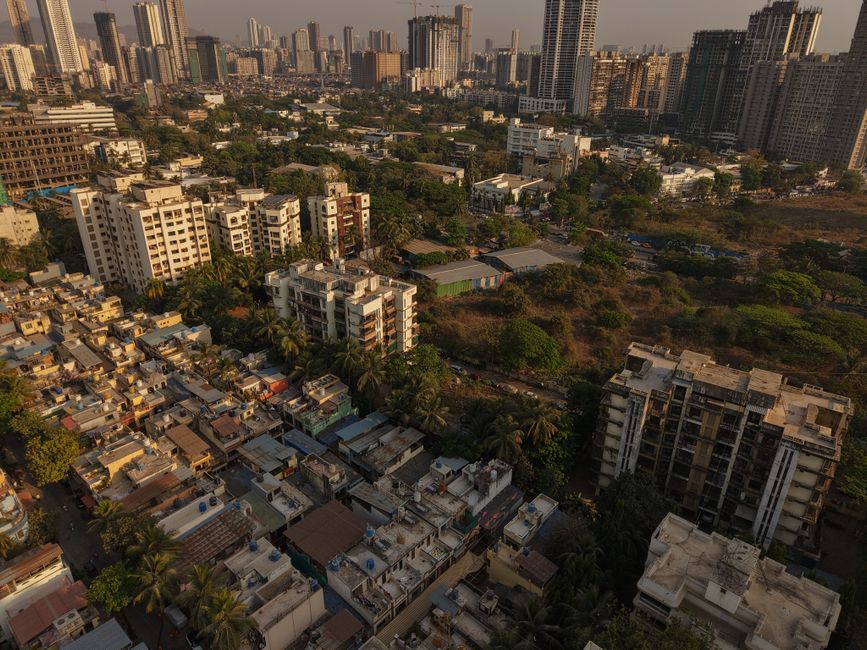
The clouds are here, the pavements are wet, and Mumbaikars are convinced the worst of the heat is over. They are wrong. Ambient humidity during Mumbai's southwest monsoon, which peaked at 94 percent relative humidity across the city on July 1, according to the India Meteorological Department's Santacruz observatory, actively prevents sweat from evaporating, trapping heat inside the body and triggering fluid loss that most people never notice because they never feel truly dry.
This is not a comfort problem. It is a physiology problem. And the science explaining it has sharpened considerably in the last three years, with findings that carry direct consequences for the roughly 12.5 million people packed into Greater Mumbai's 603 square kilometres through a monsoon that now runs hotter than historical baselines.
Why monsoon humidity short-circuits the body's cooling system
The human body cools itself through evaporative heat loss. When relative humidity climbs above 75 percent, that process stalls. A 2023 paper published in the journal Nature Communications found that a wet-bulb temperature of just 31°C, a threshold Mumbai regularly crosses between June and August, impairs thermoregulation in healthy adults within 90 minutes of moderate outdoor exertion. The city logged wet-bulb readings above 30°C on 18 separate days in June 2026 alone, according to IMD data.
The body compensates by increasing cardiac output and redistributing blood flow, both of which accelerate fluid loss through respiration and residual perspiration. The catch is that a person standing at the Marine Drive promenade at 8 a.m. during a light drizzle feels cool, so they do not drink. By the time thirst registers, mild dehydration, clinically defined as a 1 to 2 percent drop in body weight from fluid loss, has already compromised concentration, raised heart rate, and reduced kidney filtration efficiency.
A 2024 review in Frontiers in Physiology confirmed that thirst is a lagging indicator, not a real-time one. Adults over 40 experience an even more blunted thirst response, meaning the Bandra and Juhu morning walkers who skip water because the breeze feels pleasant are precisely the group most at risk.
What Mumbai residents are drinking instead, and why it falls short
Walk down Linking Road in Bandra on any July morning and the most common sight is cutting chai in a kulhad, bought for ₹15 to ₹20 at any of a dozen stalls between Turner Road and Hill Road. Chai is not neutral hydration. The caffeine in two standard cuttings delivers roughly 80 milligrams of caffeine, enough to produce a mild diuretic effect that offsets a portion of the fluid consumed. The same applies to the office crowd in Lower Parel and BKC reaching for a third espresso by 11 a.m.
Packaged coconut water, widely sold outside Lilavati Hospital in Bandra West and at kiosks along the Powai Lake walking track, is closer to optimal. It delivers electrolytes, particularly potassium and sodium, that plain water does not replenish after sweat loss. Sports physiologists recommend a sodium concentration of 400 to 1,100 milligrams per litre in a rehydration drink for anyone exercising in humid heat; packaged coconut water averages around 250 milligrams per litre, which is better than nothing but still insufficient for anyone doing more than a gentle walk.
KEM Hospital's general medicine outpatient department in Parel typically sees a 20 to 30 percent spike in heat-and-dehydration-related presentations every July, based on publicly available municipal health data from the Brihanmumbai Municipal Corporation. The numbers are less dramatic than peak summer, which is exactly why clinicians say they are undercounted, monsoon cases go unreported because patients dismiss fatigue and headache as humidity discomfort rather than a medical signal.
The practical fix is less exotic than the wellness industry suggests. Aim for 35 millilitres of fluid per kilogram of body weight daily during high-humidity months, a 70-kilogram adult needs roughly 2.5 litres. Add a pinch of sendha namak (rock salt) and a squeeze of lime to a litre of water and you have a homemade oral rehydration solution that outperforms most branded isotonic drinks at a fraction of the ₹80 to ₹120 they cost at convenience stores. And drink before you feel thirsty, by the time you do, your body is already behind. Consult a physician or registered dietitian for guidance tailored to your own health profile.