wellness
How to Start a Walking Group in Your Neighbourhood
From Powai Lake to the Marine Drive promenade, Mumbai's pavements are ready, here's how to turn a solo stroll into a community movement.
How we reported this
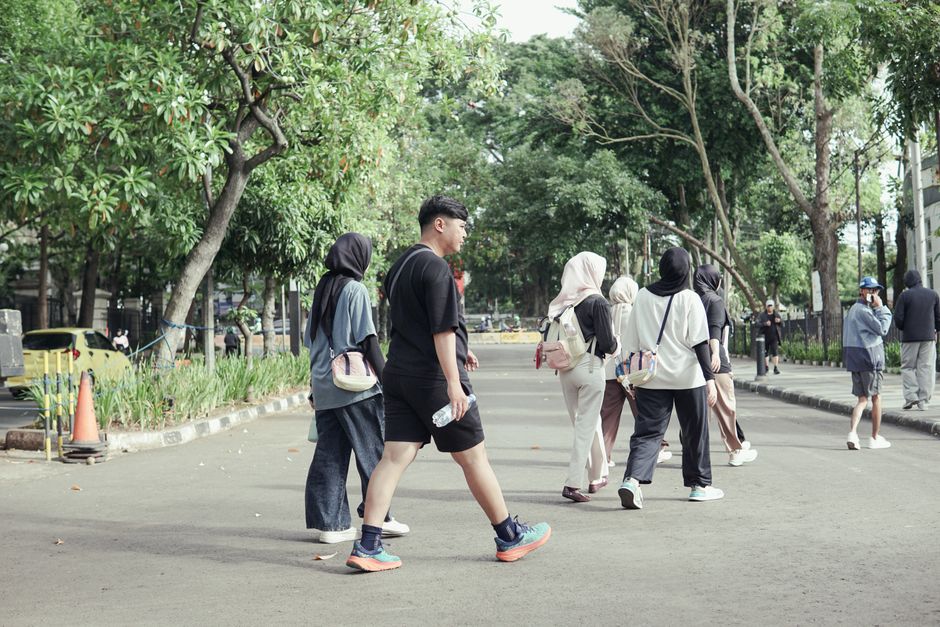
Seven people. That's often all it takes to make a walking group stick. Fitness researchers and community organisers who have studied neighbourhood exercise habits consistently find that groups of between six and twelve members sustain themselves best, small enough that no one gets lost, large enough that a few absences don't kill momentum. In a city of 21 million people, Mumbai has the numbers. What most localities lack is the nudge to begin.
The timing matters. Mumbai's monsoon season, which runs roughly June through September, traditionally pushes fitness routines indoors. But July mornings, particularly between 6 a.m. and 7:30 a.m., often deliver dry windows between rain spells, and the cooler air that follows overnight showers makes walking genuinely pleasant. Gym memberships at mid-range facilities in Bandra West currently run between ₹2,500 and ₹4,500 per month. A well-run neighbourhood walking group costs nothing after you've printed a few flyers.
Where Mumbai Already Walks
The city's existing fitness geography is a serious advantage. The Marine Drive promenade, formally the Netaji Subhash Chandra Bose Road seafront stretch from Nariman Point to Girgaon Chowpatty, draws several thousand walkers on any given morning. Regulars here have spontaneously formed informal walking circles for decades, many of them older residents from nearby Churchgate and Colaba housing societies. The 3.6-kilometre one-way promenade length makes route planning effortless.
Powai Lake's perimeter path, flanked by Hiranandani Gardens on one side, has become a different kind of hub, younger, more tech-sector-adjacent, with working professionals from the IIT Bombay campus area mixing with apartment residents from the Hiranandani complex. The lake circuit runs approximately 4 kilometres. On weekend mornings, it's common to spot informal running and yoga clusters that began as WhatsApp group announcements posted on Powai residents' society noticeboards. Juhu Beach, despite its uneven sand surface, hosts several organised morning fitness groups, including structured walk-and-stretch sessions that have been running independently since at least 2022.
The Brihanmumbai Municipal Corporation's open gym initiative, which installed over 200 outdoor fitness stations across the city between 2019 and 2024, created natural congregation points in parks from Shivaji Park in Dadar to Sanjay Gandhi National Park's entry zones in Borivali. Several of these sites have organically attracted regular walking groups that now coordinate through neighbourhood social media.
The Practical Steps
Starting is straightforward. Fix one day, one time, one meeting spot. Ambiguity kills early momentum faster than rain does. A notice on the society lift board, a single WhatsApp broadcast to neighbours, or a post in a local area Facebook group, Bandra Residents Forum and Powai Matters are two active examples, is enough for a first attempt. Aim for a 45-minute loop at conversational pace. If participants can't speak comfortably, the pace is too fast for a first outing.
Route safety deserves deliberate thought. In dense western suburbs like Andheri and Goregaon, footpaths on arterial roads are often broken or blocked. A better strategy is to map residential lane networks behind main roads, the internal streets of Lokhandwala Complex in Andheri West, for instance, offer a quieter 2-kilometre circuit largely free of heavy traffic. Google Maps' walking-route function, combined with a quick reconnaissance walk alone, takes twenty minutes and prevents the group's first outing from becoming a footpath obstacle course.
Frequency shapes identity. Groups that meet three mornings a week, say, Monday, Wednesday, Saturday, tend to develop the social bonds that keep people showing up through work pressures and weather. Those that meet only once a week often dissolve within two months. A free scheduling tool like Doodle or a simple WhatsApp poll can settle timing in one round of messages.
Anyone managing a chronic health condition, joint problems, cardiovascular concerns, or high blood pressure, should check with a doctor at a facility like KEM Hospital in Parel or Lilavati Hospital in Bandra before beginning a new exercise routine. For everyone else, the biggest barrier is usually organisational, not physical. Mumbai has the walkers. The neighbourhoods have the streets. The missing piece is someone willing to send the first message.